Dissertation Project
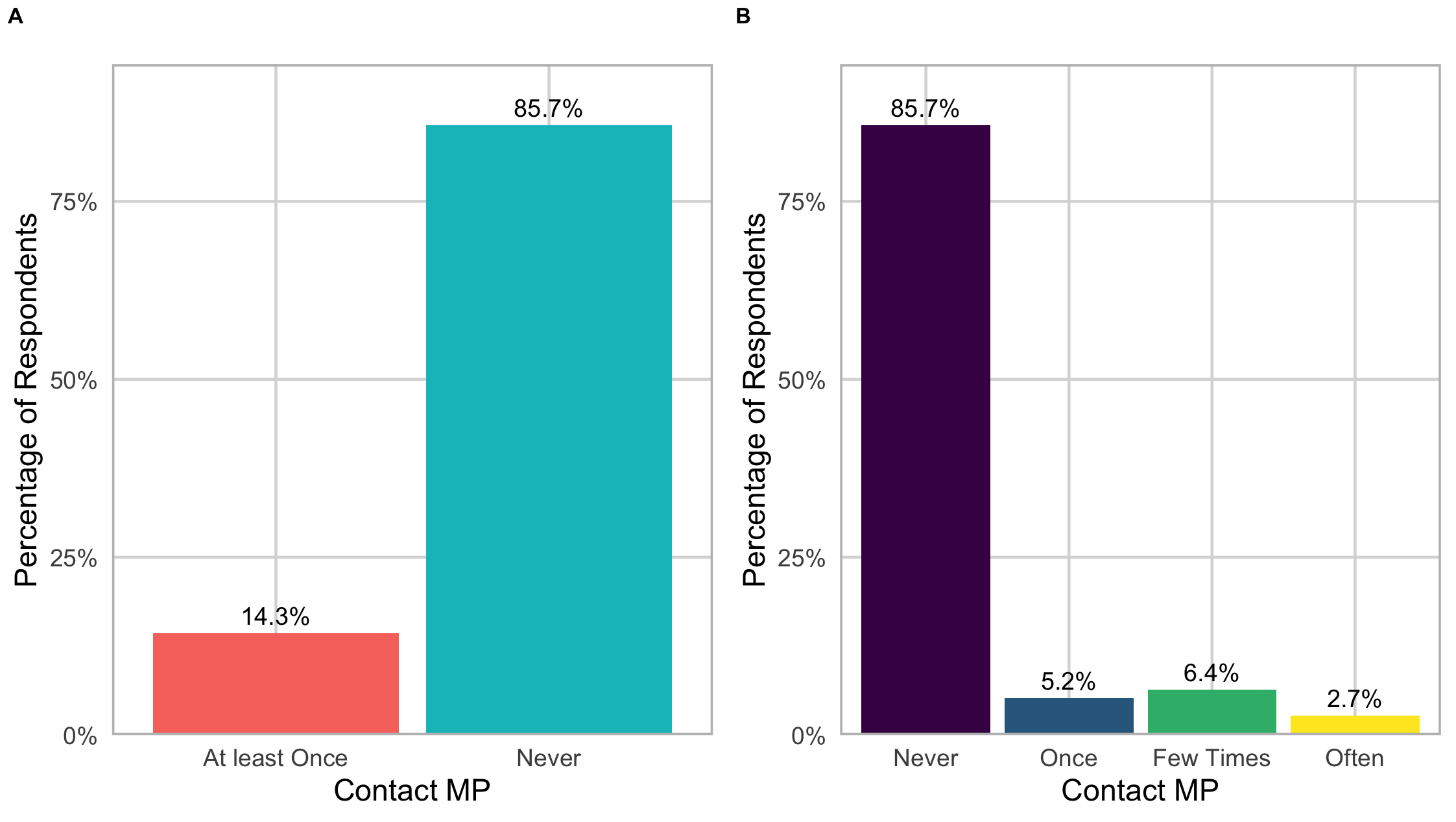
My dissertation investigates how electoral competition and turnover shape citizen demand-making and accountability in African democracies, with a focus on Ghana. The central puzzle is why citizens often contact their Members of Parliament (MPs)—who are primarily legislators—for goods and services that are the formal responsibility of local or executive officials. I argue that citizens behave strategically, directing demands toward the actors over whom they perceive the greatest electoral leverage. When seats frequently change hands, voters infer that MPs are politically vulnerable and thus more likely to respond to citizen requests in order to secure reelection.
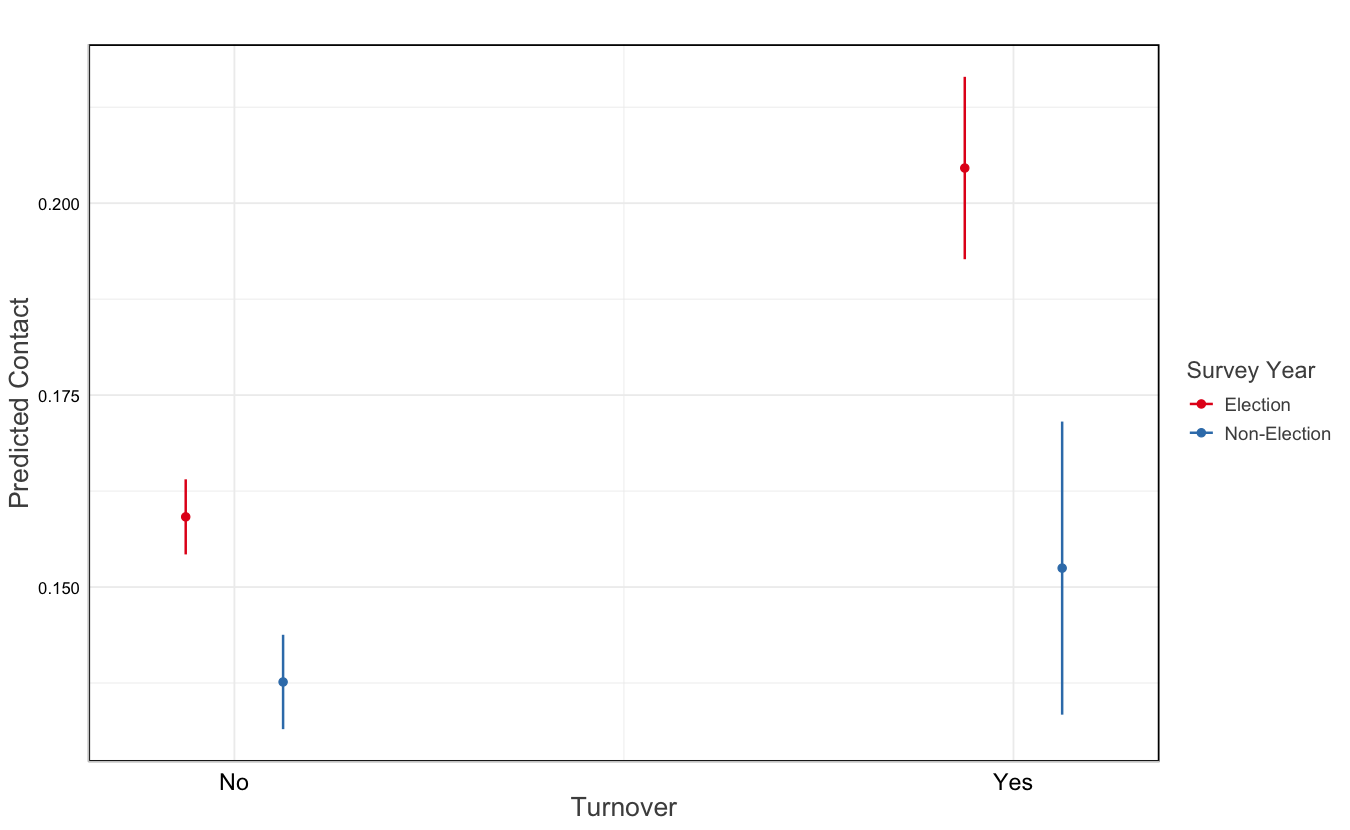
Drawing on Afrobarometer survey data, a new dataset of constituency-level election results, and qualitative interviews with MPs, I show that voters in constituencies with higher seat turnover and closer electoral margins are significantly more likely to contact their MPs. Robustness checks reveal that this effect does not extend to unelected or non-legislative elites, underscoring that voters respond specifically to signals of electoral accountability. This research contributes to broader debates on democratic responsiveness and political behavior in Africa. It shows that even in clientelistic settings, citizens are not merely passive or misinformed but make contextually rational decisions about how to engage the state—thereby reshaping our understanding of accountability under competitive clientelism.